
Livraison le jour même ou le lendemain

Qualité garantie

Débloquez vos offres de bienvenue: Livraison GRATUITE | Jusqu'à -80 % | 30 jours d'essai gratuits à JoyPlus
Téléchargez l'application
Choosing a 1.75?mm PLA filament? Sounds simple enough. Yet, the quality of your 3D prints depends entirely on it. A bad spool is a recipe for disaster: clogged nozzles, warping (deformation), poor finishes... Your promising project can quickly turn into a pile of useless plastic and a huge waste of time. In a sea of options, knowing how to separate the wheat from the chaff is crucial.
This guide is here to help you make an informed decision. We'll review the essential criteria to check before you buy and present our selection of the best filaments on the market, chosen for their excellent performance and value for money.
By the Joybuy team, your 3D printing experts.
Before you pull out your credit card, here are the key points that will make the difference between a successful print and a total headache.
Modern 3D printers run at lightning speed. The problem? Not all filaments can keep up. A high-speed PLA is specially formulated to be more fluid, allowing it to handle blazing-fast extrusion rates without compromising on quality. If you have a high-performance machine (think the latest models from Creality, Bambu Lab, or AnkerMake), using a standard filament at full throttle is a recipe for guaranteed under-extrusion. The good news: a high-speed filament will adapt to slower speeds without any issues. Checking the manufacturer's recommended speed range is therefore essential. For popular printers like the Ender 3, a good standard PLA often does the job, although a higher-performance filament can truly elevate the final finish.
Diameter consistency is the most critical factor. A filament with a varying thickness is the number one cause of clogged nozzles. Aim for filaments with the tightest possible diameter tolerance: ±0.03?mm is a good start, but ±0.02?mm is ideal. This precision ensures a constant flow of material, which guarantees uniform layers and perfect adhesion. In other words, a good anti-clogging filament is, first and foremost, a filament with a perfectly controlled diameter from the factory.
This is a detail that can make or break your print: the winding quality of the 1?kg PLA spool. A poorly wound filament is a disaster waiting to happen: knots can form, block the extrusion, and ruin a print that has been running for hours. Reputable manufacturers don't skimp on this and use automated systems for flawless winding. Another crucial point: PLA is hygroscopic, meaning it soaks up moisture from the air like a sponge. Always check that the spool arrives in a vacuum-sealed package with a desiccant packet to protect it until you're ready to use it.
We've scoured the market to bring you a selection of 3D printing filaments that stand out from the crowd, whether your priority is speed, everyday reliability, or superior technical properties.
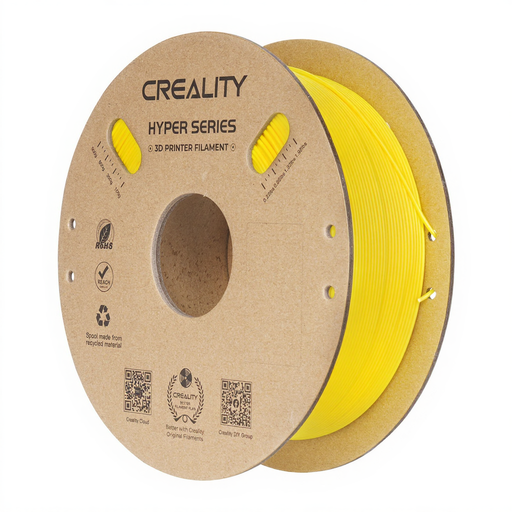
Why it stands out
This Creality filament is built for speed. Its key strength is its compatibility with dizzying print speeds of up to 600?mm/s, as advertised by the brand. It's the perfect partner for the latest generation of FDM printers.
Pros
Who is it for? For owners of fast 3D printers who want to unlock their machine's full potential without sacrificing fine detail.
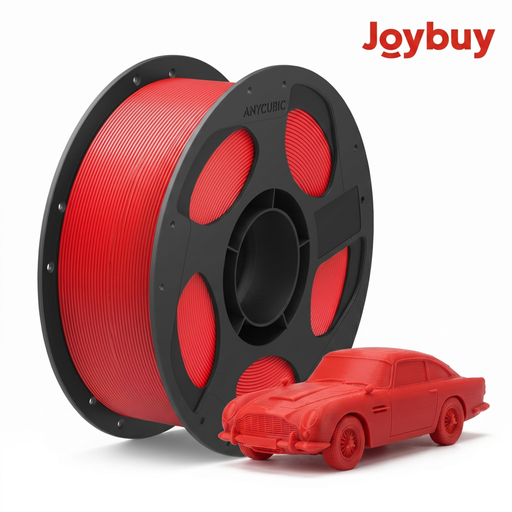
Why it stands out
This filament is the Swiss Army knife of 3D printing, perfect for everyday use. It focuses on reliability and consistency—two essential assets for prototyping, school projects, or small-batch production.
Pros
Who is it for? For beginners, makers, and professionals looking for a reliable and cost-effective everyday filament for a multitude of applications.
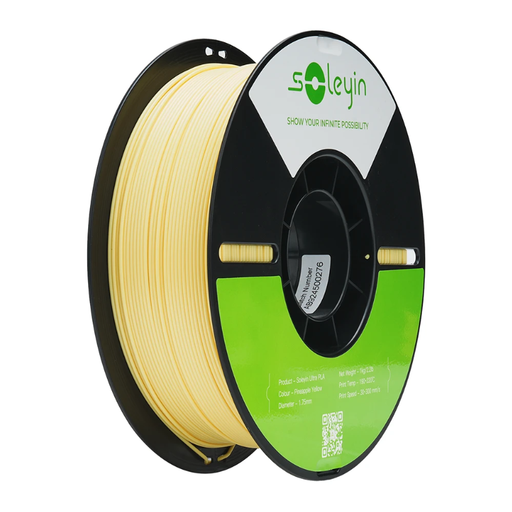
Why it stands out
Creality's "Ultra PLA" line is like standard PLA on steroids. This filament promises better mechanical strength and a very elegant matte finish, without being a headache to print with.
Pros
Who is it for? For those who want to level up from basic PLA, seeking better durability and a flawless visual finish.
Our selection is just a taste of what's available. The world of PLA filament is vast! For a specific colour, a composite material, or simply to compare other options, feel free to browse our full catalogue.
? Discover Our Full Range of 3D Printing PLA Filament
A high-speed PLA is more fluid when melted, so it flows faster and more easily through the nozzle. Conversely, if a standard PLA is extruded too quickly, it doesn't have time to melt evenly, causing under-extrusion (a lack of material) and making parts brittle. High-speed PLA is therefore specifically formulated for the fastest printers.
PLA is sensitive to moisture. By absorbing water from the air, it becomes brittle and can cause bubbles or crackling sounds during printing. The solution? Always keep your spool in an airtight bag with its silica gel packet. For long-term storage, invest in a sealed container, ideally with a dehumidifier.
Yes, 1.75?mm PLA filament is the near-universal standard. It is compatible with the vast majority of FDM 3D printers, including bestsellers from Creality (Ender series), Anycubic, Prusa, and more. However, be aware that a much rarer 2.85?mm diameter also exists. The one thing to remember: always check the compatible diameter for your machine before confirming your purchase.