
Livraison le jour même ou le lendemain

Qualité garantie

Débloquez vos offres de bienvenue: Livraison GRATUITE | Jusqu'à -80 % | 30 jours d'essai gratuits à JoyPlus
Téléchargez l'application
Choosing the right 1.75mm PLA filament is what separates a brilliant idea from a successful object... or a resounding failure. Between prints that warp, nozzles that clog, and disappointing finishes, finding the perfect spool for your project and your 3D printer is paramount.
As a product expert at Joybuy, my mission is to help you navigate the options. This guide is designed to give you concrete selection criteria and introduce you to reliable choices, ensuring every print is a success. Whether you're a passionate creator, a prototyping professional, or an educational institution, you'll find what you need to feed your machine here.
Before you jump on the first 1kg PLA spool you see, there are a few technical criteria to keep a close eye on. This is your guarantee of a smooth printing experience and a result that lives up to your expectations.
Dimensional accuracy indicates the maximum variation in the filament's diameter along its entire length. For example, a 1.75mm filament with an accuracy of ±0.02mm ensures a consistent diameter between 1.73mm and 1.77mm. A tight tolerance is the hallmark of a high-quality PLA. It ensures smooth extrusion, prevents nozzle clogging, and guarantees uniform layers—a crucial factor for the strength and aesthetics of the final part.
Standard PLA typically has a slightly glossy finish, which can sometimes accentuate the appearance of print layers. For projects where visual appeal is paramount (models, figurines, decorative objects), a matte PLA filament is an excellent alternative. Its surface diffuses light, effectively hiding layer lines and delivering a softer, more professional, almost artistic finish.
PLA (Polylactic Acid) is a bioplastic derived from renewable resources like corn starch. The term biodegradable PLA is often highlighted, but the reality is more complex. PLA does not biodegrade in a home composter or in nature. It requires specific temperature and humidity conditions found only in industrial composting facilities. Therefore, be sure to check your local recycling options for managing your failed prints and 3D filament waste.
Let's get down to business. Here is a selection of filaments that stand out for their reliability and performance, suitable for all types of projects.
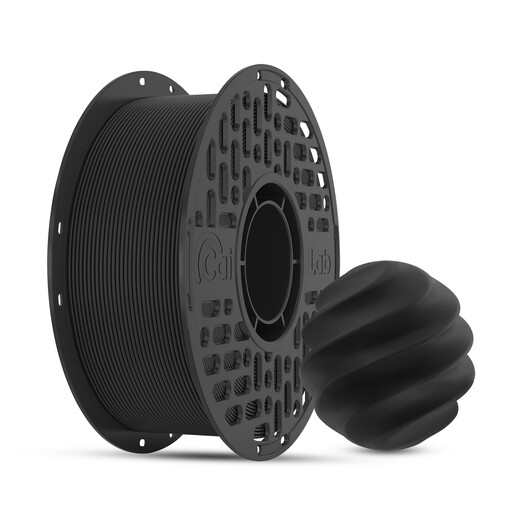
What sets it apart
This new formula from CaiLab delivers a sophisticated matte finish that turns prints into true collector's items. Its non-glossy look and soft-touch texture hide layer lines for a decidedly professional appearance.
Advantages
Who is it for??
Ideal for designers, artists, and creators looking to produce parts with a flawless visual finish, such as figurines, presentation prototypes, or decorative objects.
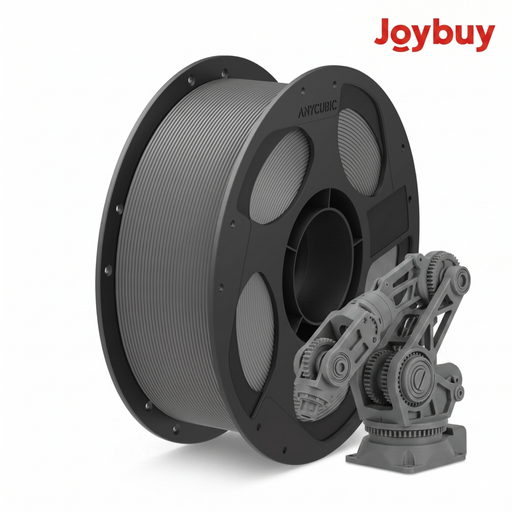
What sets it apart
This ANYCUBIC filament stands out as a reliable choice for its consistency and dependability. It's the kind of spool you can count on for long prints or batch projects without any unpleasant surprises. Its neutral grey colour is perfect for prototyping, as it highlights shapes and details.
Advantages
Who is it for??
Perfect for beginners, engineers making functional prototypes, and fab labs that need a versatile and reliable filament for heavy use.
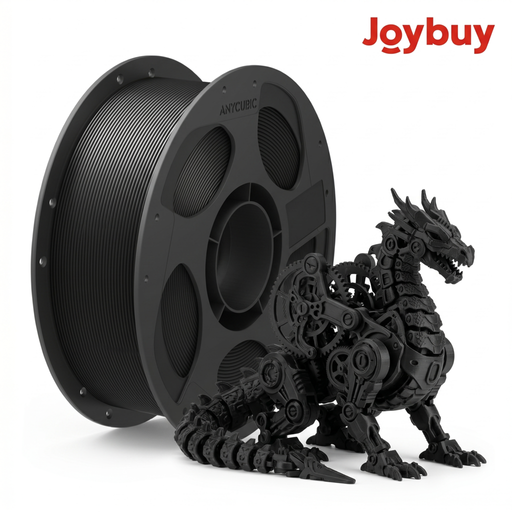
What sets it apart
This spool of black PLA stands out by combining ANYCUBIC's reliability with a top-tier technical specification: a dimensional accuracy of ±0.02mm. This precision guarantees exceptionally smooth and consistent filament feeding, a crucial asset for reproducing the finest details and succeeding with complex prints.
Advantages
Who is it for??
Recommended for users printing functional parts, electronic enclosures, or any project requiring high precision and a classic, clean black finish.
Black is a timeless classic, but your projects might deserve a different palette. If you're looking for an alternative or simply want to explore more choices, we've got you covered.
Discover our full range of black PLA filament and other colours to find the perfect spool for your next project.
1. How should I properly store a spool of PLA filament??
PLA is hygroscopic, meaning it absorbs moisture from the air. Damp filament can cause bubbles, crackling during extrusion, and poor print quality. To preserve it, store your 1kg PLA spool in an airtight container (like a resealable bag or a plastic box) with desiccant packets (silica gel) to absorb any residual moisture.
2. What is the difference between PLA and PLA+??
"PLA+" (or PLA Pro, Tough PLA) is primarily a marketing term. It generally refers to a PLA formulation modified with additives to improve certain properties, such as impact resistance or flexibility. There is no official standard for PLA+, and for most common applications, a standard high-quality PLA is more than sufficient, already offering excellent rigidity and ease of printing.
3. Is PLA filament safe for objects that come into contact with food??
Although pure PLA is derived from plant-based sources, commercial filaments contain dyes and additives that are not always certified for food contact. Furthermore, the porous nature of FDM 3D printing creates micro-gaps where bacteria can thrive. It is therefore not recommended to use PLA-printed objects for direct, prolonged contact with food, unless the filament manufacturer explicitly certifies its product as "food-grade" and post-processing techniques (like applying a food-safe epoxy resin coating) are used.