
Livraison le jour même ou le lendemain

Qualité garantie

Débloquez vos offres de bienvenue: Livraison GRATUITE | Jusqu'à -80 % | 30 jours d'essai gratuits à JoyPlus
Téléchargez l'application
A 0.5 mm gel pen is versatile enough for note-taking, homework, office work, or journaling. However, not all models are created equal. A tip that is too fine can snag on paper, slow-drying ink can smudge on your fingers, and a fragile mechanism can render the pen unusable within weeks.
Before purchasing a pack of gel pens, it's wise to look beyond the marketing claims. Here are the criteria to examine, the pitfalls to avoid, and a selection tailored to different uses.
The 0.5 mm specification generally refers to the tip diameter, but it alone does not guarantee a consistent line. Writing comfort also depends on the ball, ink viscosity, and assembly quality. Even a fine tip can produce skips or drag if the ink flow is poor or if the pen is used on highly absorbent paper.
For school notebooks or graph paper, prioritize a fine tip with consistent ink delivery. Gel pens equipped with a ballpoint or "twin-ball" tip are designed to minimize skipping, according to manufacturer specifications.
Quick-drying gel pens can help reduce smudging during note-taking, especially for left-handed users. However, the result depends on the paper, the amount of ink deposited, and the pressure applied. Fast-drying ink is not necessarily permanent or suitable for official documents.
For a planner or notebook, this feature is practical. For a document that needs to remain legible and withstand heat, check the manufacturer's instructions before use.
A retractable pen eliminates the risk of losing the cap and protects the tip when stored in a pencil case or bag. However, a button that is too stiff or too loud can quickly become annoying in class, at the library, or in a meeting. For long writing sessions, a non-slip grip and a well-balanced shape also make a significant difference.
For precise writing, a 0.5 mm tip offers an excellent balance between fineness and readability. It is suitable for annotations, tables, lists, and French-ruled (Séyès) notebooks. A 0.4 mm tip favors detail, while a 0.7 mm tip produces a bolder line, often preferred for journaling or coloring.
Black gel pens are ideal for classes, reports, and everyday documents. Multi-color models allow you to organize information: headings, definitions, reminders, or tasks.
Erasable gel pens typically use thermosensitive ink. This can be removed by friction with the designated eraser tip, but this technology requires a precaution: high heat can alter the annotations. These pens are suitable for exercises, drafts, and planners, but not necessarily for documents that must remain permanent.
For note-taking, also look for mentions of smudge-proof, quick-drying, or transfer-resistant. These describe a product feature without guaranteeing the same result on all paper types.
Paper directly impacts writing comfort. Clairefontaine Mimesys notebooks, available in 24 × 32 cm format, use 90 gsm Vélin Velouté paper with a three-color Séyès ruling. This large format provides more space for lessons, homework, and diagrams than a more compact notebook.
With a gel pen, choose a surface that is smooth enough to minimize snagging and ink transfer. The Séyès ruling remains particularly practical for students and teachers who want consistent guidelines.
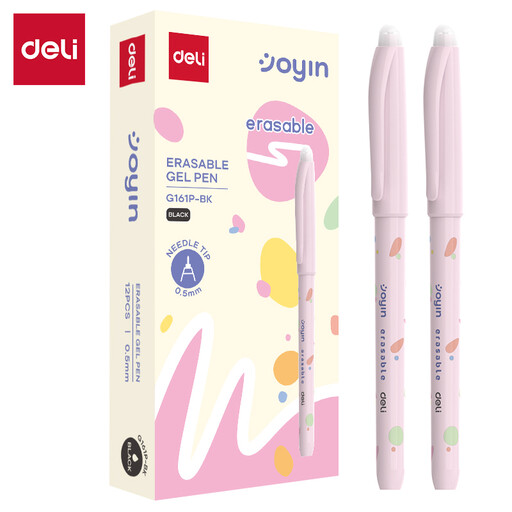
Why this choice fits this profile: This 12-pack is suitable for school supplies, the office, and everyday home use. The erasable ink makes corrections easy during exercises and note-taking.
The advertised 0.5 mm tip and the eraser end meet the needs for precision and correction without requiring extra accessories.
0.5 mm needle tip, thermosensitive ink, and a 12-piece pack.
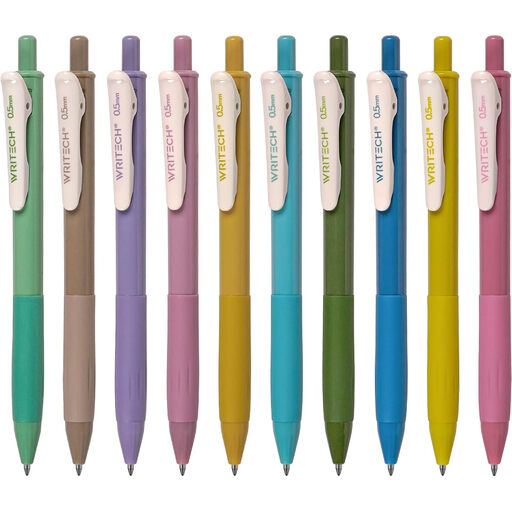
Why this choice fits this profile: Journaling and creative hobby enthusiasts have ten matching shades to structure a page, draw, or distinguish between different categories of notes.
The retractable mechanism protects the tip during storage, and the advertised quick-drying ink minimizes the risk of smudging.
Ten vintage colors, ergonomic non-slip grip, and a 0.5 mm ballpoint tip.
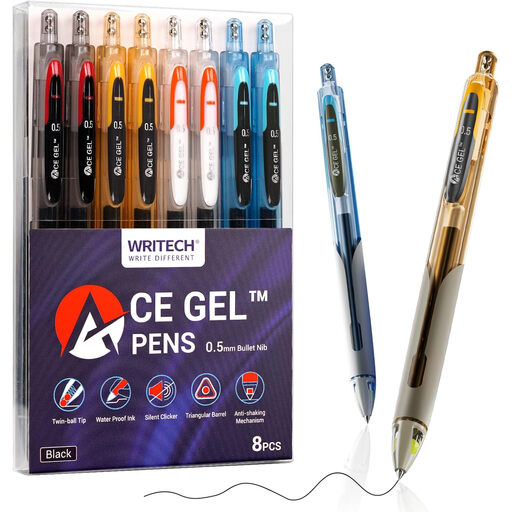
Why this choice fits this profile: This pack is for people who write regularly in meetings, classes, or at the office and want to maintain a consistent presentation.
The triangular body, silicone grip, and silent mechanism meet the demands of prolonged or discreet use.
Black ink, 0.5 mm twin-ball tip, soft grip, and advertised silent button.
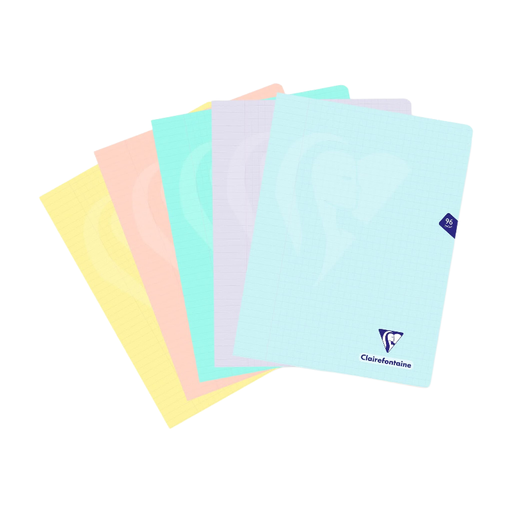
Why this choice fits this profile: The large format and three-color Séyès ruling are perfectly suited for lessons, homework, and structured note-taking.
The polypropylene covers are advertised as flexible, opaque, and water-resistant, eliminating the need for a separate protective cover.
Five notebooks, 90 gsm Vélin Velouté paper, three-color Séyès ruling, and advertised French manufacturing.
We have compiled a comprehensive, real-time updated list of products that fully meet these strict selection criteria and European safety regulations.
To preserve your school supplies and gel pens, a few simple steps are enough:
Erasable inks must be kept away from heat sources, as their thermosensitive technology can alter annotations.
Yes, this tip size is generally suitable for the lines and spacing of Séyès notebooks. It allows for precise writing without taking up too much space. The result, however, depends on the ink flow and the paper weight.
The erasable pen uses thermosensitive ink that can be removed by friction. The standard pen leaves a mark intended to remain visible. For homework and planners, the erasable pen offers more flexibility; for final documents, check the desired level of permanence.
The duration depends on writing frequency, note length, and the pressure applied to the tip. A pack of 8, 10, or 12 pens provides replacements on hand, but storage conditions also matter: heat, an uncapped tip, or improper storage can accelerate drying.